Different Masks and their Efficacy

Different Types of Masks and their Efficacy

    The CDC, Centers for Disease Control and Prevention,  has recommended the public to wear face masks when going outside and stores require the use of a face mask for entry. Studies have proven that face masks are effective against COVID-19 and wearing them can prevent transmission. (See Efficacy of Masks Post) There are many types of face masks/coverings, some being more effective than others. This post will walk you through the most common types of face masks and how effective each type is. 


Surgical Masks


    A surgical mask is a loose-fitting disposable mask that creates a barrier between the wearer's nose/mouth and droplets or other contaminants from the environment. Surgical masks can filter out large particles in the air but are less effective in blocking out smaller (aerosol) particles which can be transmitted through coughing or sneezing. The loose fit of the mask also gives room for germs and contaminants to enter from underneath the mask. Surgical masks are intended for one time use and are most effective at blocking out large-particle droplets or sprays. In the United States, surgical masks must meet ASTM, American Society for Testing and Materials, standards. There are three main types of surgical masks, each with different levels of protection:


1. Level one: for low risk of exposure to fluids

2. Level two: for moderate risk of exposure to fluids

3. Level three: for high risk of exposure to fluids


*Surgical Mask levels are typically written on boxes containing masks


50 Pack Single Use Ear-Loop Mask | HoMedics.com
https://www.homedics.com/ear-loop-face-mask-50-pack.html

N-95 Masks/Respirators


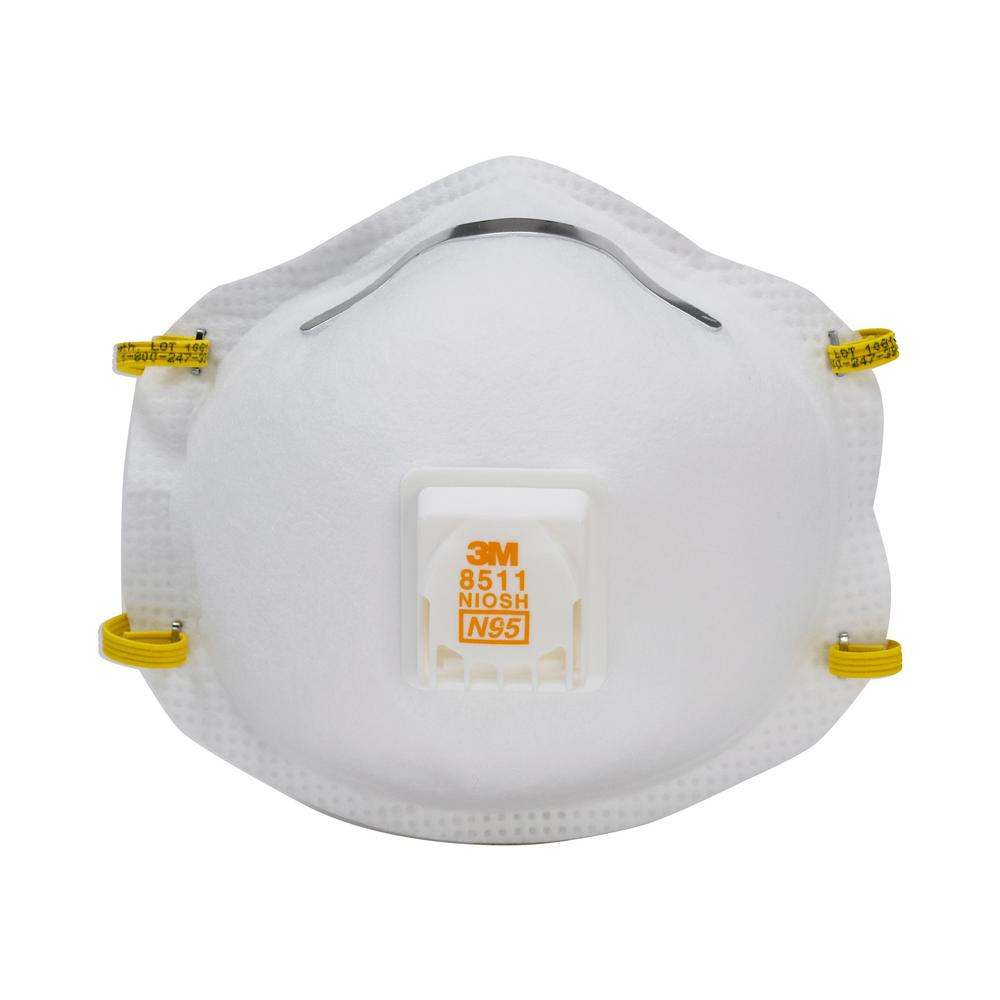
    N-95 masks are respirators that offer more protection than surgical masks. The mask is designed to have a close facial fit and can filter out both large and small particles when the wearer inhales. As indicated by the name, N-95 masks are able to block 95% of small particles. Some N-95 masks have a one-way valve that makes it easier to breathe through. A one-way valve protects the wearer from infection but the valve releases unfiltered air when the wearer breathes out.  This does not prevent the wearer from spreading the virus. N-95 masks are most commonly used in healthcare settings and are not recommended to be used by the public. CDC recommends that N-95 respirators should be reserved for medical responders and health-care workers as these masks are critical supplies.


    In the United States, respirators must meet NIOSH, National Institute for Occupational Safety and Health, standards. You may be wondering what the 'N' in N-95 means. Masks that begin with the letter 'N' are just one type of respirator. According to the NIOSH, there are three classes of respirators depending on their resistance to oil, which means there is protection against both solid and liquid aerosol particles that may contain oil.


1. Class N: no oil resistance. includes N95, N99 and N100 masks. The number after the letter indicates the percentage of filtered particles.

2. Class R: resistant to oil for up to 8 hours. Includes R95, R99 and R100 masks.

3. Class P: completely oil resistant. Includes P95, P99 and P100 masks.


3M N95 Sanding and Fiberglass Valved Respirator (5-Pack)-8511HB2-C ...
https://www.homedepot.com/p/3M-N95-Sanding-and-Fiberglass-Valved-Respirator-5-Pack-8511HB2-C/203225611


Cloth Masks

    Cloth face masks are easy and cheap to find or make. While a tighter fitting mask is better, wearing a cloth mask or any other type of covering is better than none. A US study investigated which household materials are most effective at blocking particles. It was concluded that vacuum cleaner bags, heavyweight "quilter's cotton", and multiple layers of fabric were more effective while scarves and bandanas only captured a fraction of the particles. Here is a video from the CDC on how to make your own face covering: How to make your own face covering.
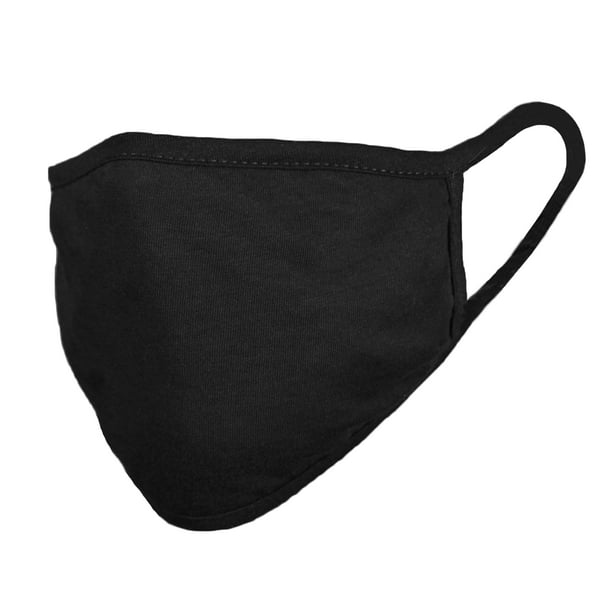

DALIX - DALIX Premium Cotton Cloth Mask Reuseable Washable in ...
https://www.walmart.com/ip/DALIX-Premium-Cotton-Cloth-Mask-Reuseable-Washable-in-Black-Made-in-USA/496544207


Wearing a Mask

    Whatever type of mask you're using, it is important to wear it properly for maximum protection. Below are instructions from Sanford Health on how to properly wear and remove a face mask.

Foutz, Katie. “How to Properly Wear a Face Mask.” Sanford Health, 6 Apr. 2020, “COVID-19 FAQs: Do We Need to Wear Face Masks?” Sanford Health News, 27 Apr. 2020, news.sanfordhealth.org/coronavirus-disease-2019-covid-19/need-face-masks/.


Conclusion


    N-95 respirators are the most effective masks in blocking out both large and small particles. However, as they are considered critical supplies, these masks are not recommended for public use. Surgical masks and cloth masks are more commonly used and good for blocking out large particles. It is important to dispose of surgical and N-95 masks after using them and to regularly wash cloth masks. Masks should also be fitted and tightly secure for extra protection.

    While cloth and surgical masks provide some protection against virus particles, it is also important to maintain socially distant while seeing others to lower chances of transmission. Wearing masks or any type of covering is better than not covering your mouth/nose at all. If everyone wears a mask or covering in public and remains socially distant, COVID-19 transmission rates will be significantly lowered.


Sources:

1. Center for Devices and Radiological Health. “N95 Respirators, Surgical Masks, and Face Masks.” U.S. Food and Drug Administration, FDA, 7 Jun, 2020, www.fda.gov/medical-devices/personal-protective-equipment-infection-control/n95-respirators-surgical-masks-and-face-masks.

2. Cheaytani, Raafat. “Choosing a Surgical Mask or Respirator.” Buying Guides MedicalExpo, 6 Apr. 2020, guide.medicalexpo.com/choosing-a-surgical-mask-or-respirator/.

3. “Can Face Masks Protect against the Coronavirus?” Mayo Clinic, Mayo Foundation for Medical Education and Research, 28 May 2020, www.mayoclinic.org/diseases-conditions/coronavirus/in-depth/coronavirus-mask/art-20485449.

4. Devlin, Hannah. “Covid-19: What Kind of Face Mask Gives the Best Protection against Coronavirus?” The Guardian, Guardian News and Media, 17 June 2020, www.theguardian.com/world/2020/jun/17/covid-19-what-kind-of-face-mask-gives-the-best-protection-against-coronavirus.

Comments

Popular posts from this blog

Efficacy of Masks

Do Wearing Masks Really Prevent Coronavirus            For weeks, U.S. health authorities discouraged healthy Americans from wearing masks, believing they would do more harm than good. However, other countries such as China and South Korea have required all citizens to wear a mask when entering a public setting to prevent the spread of the coronavirus. But really how effective are these masks against the coronavirus? On April 3rd, Nature Medicine published an article describing their findings based off an experiment testing the efficacy of surgical face masks against coronavirus, influenza virus and rhinovirus.   Study Findings      Their results demonstrated that surgical masks were largely effective in reducing coronavirus transmission through respiratory droplets as well as aerosol particles. Three out of ten people who did not wear a mask were infected with the coronavirus through droplet particles. Out of eleven people w...

Breakthrough Infections

 COVID-19 Breakthrough Infections     As of August 2021, a little over 50% of the U.S. population has been fully vaccinated against COVID-19. However, despite the increasing number of vaccinated individuals and high efficacy of the vaccines, rare breakthrough cases have occurred. With the reports of breakthrough cases, or instances when people who are fully vaccinated get infected with COVID-19, many questions have arisen. How common are breakthrough infections? What are the symptoms? How severe are the cases? These questions are addressed in a peer-reviewed study investigating breakthrough cases among healthcare workers in Israel. The study was recently published in the New England Journal of Medicine on July 28, 2021.  About the Study     The study setting took place in the Sheba Medical Center, which is the largest medical center in Israel staffed with 12,586 healthcare workers. By April 28, 2021, 11,453 workers (91%) had been fully vaccinated with the ...

Plasma for COVID-19 treatment

FDA Authorizes Plasma for COVID-19 Treatment                     COVID-19, which has been spreading across the globe since March, has affected the lives of Americans for over six months. Many people, including the President, are eager to eliminate the virus after a dreadful 6 months of rising cases and quarantine. To their dismay, hopes of eliminating the virus by Easter and then by August, seemed to turn into an unreachable dream for Americans. With cases rising and no sure vaccine or treatment for the virus, a future without COVID-19 seemed further and further away. Yet, this Sunday on August 23, 2020, the U.S. Food and Drug Administration authorized the first treatment for COVID-19: convalescent plasma. While the plasma has only been authorized for emergency use, many people see this authorization as progress towards eliminating the virus. However, others believe that the plasma is not as effective, and that the FDA was pres...